I honestly feel like my emotions are broken.
Like cogs and gears in an old pocket watch they've stopped turning
in a normal fashion.
There is no winding,
there is no perpetual motion of the day,
there is only stillness upon a cracked, stalwart visage.
Perhaps you could once read the day and night upon my face,
count the seconds by my pulse,
keep eternity divided and categorized into tiny fractions.
The only fractions that remain are the fractured
internal pieces that feel no passage of anything.
Wrote this when I was avoiding going to a wedding.
Seems like everyone's finding that special someone. However, I propose a toast to being alone and sorting oneself out before dragging another into his or her mess.
Sunday, October 10, 2010

Monday, September 20, 2010
The World Walkers Excerpt
Hey,
Everyone knows at this point that I've been working on my novel. So I wanted to let my readers know that I'm actually working and not slacking. So here is a short excerpt from the beginning of the book. Let me know what you think.
The Beginning
In the beginning there was Darkness. Then an explosion! Then Darkness again…
Within this Darkness lay an egg and within this egg lay Eternity. The Darkness thought that perhaps it should hatch Eternity, but knew full well that Eternity was not yet ready to hatch. The cosmic egg was still far too fresh and what lay inside was still just a nasty clump of cosmic goo.
Eventually, with only an egg to keep it company, the Darkness grew lonely and in the tranquil sea of the abyss there grew a simple longing and that longing was for decoration of his domain and, of course, companionship. The Darkness created from itself inhabitants to decorate and the inhabitants of this dark universe began to do just that. Before long they had completed their great works, unfortunately it was still dark and nobody could see a thing.
Before long the inhabitants began to trip on the decorations that they couldn’t see and Chaos was born. The swirling sea of the dark abyss was stirred time and again by the clumsiness of the inhabitants and it grew very hot. The abyss became one with Chaos and Chaos lived within the Darkness. Chaos gave the first glow to the universe. Eventually the inhabitants grew fond of the glow and would come every cycle to stand by the incandescent, swirling sea. This left Darkness alone yet again. Even though Darkness spanned the entire length of the universe, it found that it could not enjoy the glow, because, as it observed, wherever the glow was Darkness could not be.
The cycles passed and the inhabitants gathered time and again by the sea’s glow, leaving Darkness to its own brooding loneliness. The entire long while, it vigilantly watched the egg for a sign that Eternity was ready. It was in this manner that Time crawled into the hallowed nook of Heaven’s arms and napped. Eternity shaped and molded within the egg’s womb.
Everyone knows at this point that I've been working on my novel. So I wanted to let my readers know that I'm actually working and not slacking. So here is a short excerpt from the beginning of the book. Let me know what you think.
The Beginning
In the beginning there was Darkness. Then an explosion! Then Darkness again…
Within this Darkness lay an egg and within this egg lay Eternity. The Darkness thought that perhaps it should hatch Eternity, but knew full well that Eternity was not yet ready to hatch. The cosmic egg was still far too fresh and what lay inside was still just a nasty clump of cosmic goo.
Eventually, with only an egg to keep it company, the Darkness grew lonely and in the tranquil sea of the abyss there grew a simple longing and that longing was for decoration of his domain and, of course, companionship. The Darkness created from itself inhabitants to decorate and the inhabitants of this dark universe began to do just that. Before long they had completed their great works, unfortunately it was still dark and nobody could see a thing.
Before long the inhabitants began to trip on the decorations that they couldn’t see and Chaos was born. The swirling sea of the dark abyss was stirred time and again by the clumsiness of the inhabitants and it grew very hot. The abyss became one with Chaos and Chaos lived within the Darkness. Chaos gave the first glow to the universe. Eventually the inhabitants grew fond of the glow and would come every cycle to stand by the incandescent, swirling sea. This left Darkness alone yet again. Even though Darkness spanned the entire length of the universe, it found that it could not enjoy the glow, because, as it observed, wherever the glow was Darkness could not be.
The cycles passed and the inhabitants gathered time and again by the sea’s glow, leaving Darkness to its own brooding loneliness. The entire long while, it vigilantly watched the egg for a sign that Eternity was ready. It was in this manner that Time crawled into the hallowed nook of Heaven’s arms and napped. Eternity shaped and molded within the egg’s womb.
Friday, September 17, 2010
9.17 Lesson on Thesis Statement
Hey,
I had a horrid week because I couldn't get focused or used to the idea that I am back at work. However, I woke up early today and composed the following lesson in a half-hour. I feel pretty good about it, but would like some feedback. Tell me what you think of the lesson, I'd really appreciate it.
Topic: 9.17.10, Thesis Statement
Aim: How can we craft a compelling thesis statement?
Do Now: Interpret the following quote
“A journey of a thousand miles must begin with a single step.”
- Lao Tzu, Chinese Taoist Philosopher (600 – 531 BC)
1. What do you think Lao Tzu is saying in the above quote?
2. Do you agree or disagree? Why?
Mini-Lesson: Thesis Statement
A quality thesis statement:
• Directly answers the question asked of you
• Is your paper’s meaningful main idea
• Makes a claim that others might dispute
• Is a road map for your paper
• Includes a topic, a precise opinion, and reasoning
Thus…
Thesis = Main Idea + Supporting Details
The Main Idea (MI) Look at “Your Task” and create a thesis statement that ANSWERS the essay prompt
The Supporting Details (SD) List at least two supporting details that you will use to support your main idea
Activity: Compose a thesis statement for your essay
Essay Question:
What is one great injustice in the world, and how should it be addressed?
Sample Thesis
One great injustice in the world is the ban on same-sex marriage. Same-sex marriage should be legal in the eyes of the state because homosexuals should have the same rights as straight people and religious beliefs should be separate from those of the state.
Homework: Complete the 1st Draft of your essay
Essay Question:
What is one great injustice in the world, and how should it be addressed?
1. The essay should be at least four organized paragraphs
2. Underline your main idea and supporting details
3. Neatly written or typed
I had a horrid week because I couldn't get focused or used to the idea that I am back at work. However, I woke up early today and composed the following lesson in a half-hour. I feel pretty good about it, but would like some feedback. Tell me what you think of the lesson, I'd really appreciate it.
Topic: 9.17.10, Thesis Statement
Aim: How can we craft a compelling thesis statement?
Do Now: Interpret the following quote
“A journey of a thousand miles must begin with a single step.”
- Lao Tzu, Chinese Taoist Philosopher (600 – 531 BC)
1. What do you think Lao Tzu is saying in the above quote?
2. Do you agree or disagree? Why?
Mini-Lesson: Thesis Statement
A quality thesis statement:
• Directly answers the question asked of you
• Is your paper’s meaningful main idea
• Makes a claim that others might dispute
• Is a road map for your paper
• Includes a topic, a precise opinion, and reasoning
Thus…
Thesis = Main Idea + Supporting Details
The Main Idea (MI) Look at “Your Task” and create a thesis statement that ANSWERS the essay prompt
The Supporting Details (SD) List at least two supporting details that you will use to support your main idea
Activity: Compose a thesis statement for your essay
Essay Question:
What is one great injustice in the world, and how should it be addressed?
Sample Thesis
One great injustice in the world is the ban on same-sex marriage. Same-sex marriage should be legal in the eyes of the state because homosexuals should have the same rights as straight people and religious beliefs should be separate from those of the state.
Homework: Complete the 1st Draft of your essay
Essay Question:
What is one great injustice in the world, and how should it be addressed?
1. The essay should be at least four organized paragraphs
2. Underline your main idea and supporting details
3. Neatly written or typed
Wednesday, September 15, 2010
Epitaphs
These are some epitaphs that my kids wrote 2 years ago, I just found them randomly on my cpu and forgot how great they were.
My Epitaph
Haley – I’m just like the class after Mr. Romero tells a joke, dead.
Richie – Advil can’t take this pain away.
Isol and Richie – Now that I’m planted in the soil, maybe I’ll grow.
Krissy – Look deep inside, you shall see, your daughter, sister, all of me.
Tati – Adios! I don’t speake English
Kim – Have I committed a sin? Or am I trying to make the world a better place? Both are wrong.
Krystle – Bury me upside down so I give back to the world what it gave to me.
My Epitaph
Haley – I’m just like the class after Mr. Romero tells a joke, dead.
Richie – Advil can’t take this pain away.
Isol and Richie – Now that I’m planted in the soil, maybe I’ll grow.
Krissy – Look deep inside, you shall see, your daughter, sister, all of me.
Tati – Adios! I don’t speake English
Kim – Have I committed a sin? Or am I trying to make the world a better place? Both are wrong.
Krystle – Bury me upside down so I give back to the world what it gave to me.
Tuesday, September 7, 2010
Great Wall
Note: Guys, tell me if you think I should expand on this short piece and turn it into a longer story.
“CAPICOO Papa!” Cliff slammed the Domino on the stone slab table. “TOMA!” Cliff danced, moving his shoulders around like the old Harlem shake. Now the score was 116 to 400. Jing and Dave were kicking our asses.
This is how the dominoes fall though. Game one equals one hundred. Game two equals seventy-five. Game three equals fifty. Finally, game four equals twenty-five points. A chichazo equals one hundred and a capicoo equals one hundred. A chichazo is when you end the game with a double zero and a capicoo is when you end the game with a domino that can be played on either side. Jing won the first game with a double zero, two hundred points right off the bat. They then went on to win the rest of the first four games.
Generally, my attitude, regarding this kind of butt whooping, would be really negative. However, this wasn’t just dominoes. This was dominoes on the Great Wall of China. Cliff and I had beaten teams from every borough in New York. There was no way I was going to let my girlfriend and my best friend’s cousin beat us. Not at the greatest moment ever in the history of the Bronx X-treme Dominoes League. This was the first time dominoes had ever even been brought to the Great Wall.
Unfortunately, we never got to finish that game. On the Great Wall there are no lights. Only the stars and the moon. During warm summer nights you can barely see the stars because the fog in the mountains is so thick. Since we didn’t really have the stars and the moon, we had Cliff’s iPod and my Nintendo DS. It was dark because we were outlaws, camping where we had no business camping. Our sleeping bags laid out on the floor inside the dusty, old garrison. Only one word could describe Dave’s idea to camp on the Great Wall, illegal. Luckily we walked three miles up the Wall to a sign that read, “Non-Tourist section. No Admission!”
The journey to this desolate spot was a long, steep climb. We arrived in a marketplace flooded with random Chinese souvenirs. Things like spirit masks, fans, and t-shirts that read, “I heart BJ.” I assume this is a play on the “I heart NY” shirts, but for Beijing. Too bad Chinese people don’t get American humor. In any case, we needed food if we were going to make the hike up the mountain and the wall. We went to the most logical place we saw in that marketplace, Subway. I had a foot-long chicken teriyaki with cheddar, all the veggies they had, and a pinch of vinegar. We then bought water, because it was ninety-two degrees, and tissue, for lonely trips into the woods, from a tiny Chinese woman who seemed to be about a hundred, or ninety-two if you believe in those sorts of coincidences. With our sleeping bags, water, tissue, and sandwiches we set off on the long journey up hill.
At about the hundredth step a man dressed in a blue button down and black slacks offered us a ride on his donkey. Unfortunately that ass wasn’t free, so we kept it walking. And walking, and walking. And walking…Did I mention there was a ton of walking? It was nice, but we were still just walking up the hill to get to the Wall. Finally we arrived at more steps, these, Dave assured me, were the steps to the Great Wall. Old stone steps made of granite bricks. We ascended these steps and saw why the wall is called Great. Monumental, massive, opulent, a true behemoth, and a dragon that sleeps, rising and falling with the mountaintops and hillsides.
After a short series of steps we arrived at the first military outpost. This watchtower, set right into the wall, was little more than a stone rectangle with small alcoves for sleeping soldiers, minuscule windows for keeping watch, and tiny steps leading up to the top. We climbed to the top. It was breathtaking, even more so than all those steps. To the north and south, the mountain forests spread out as far as the horizon. To the east and west the Great Wall stretched onwards, like a road to heaven. Jing and I took out our camera, but this bothered Dave, “Guys, this view is weak. “
“What do you mean?” We ask.
“This is only watchtower seven, we’re going to twelve.” It was thus how we walked even more.
It took us about an hour and a half to walk the rest of the dragon’s back.
Watchtower twelve is the head of the dragon, because the Chinese government will allow tourists to walk no further. With the sun setting to our backs and the vines overgrowing the Wall to our front we settled on a stone slab, took out the dominoes, and decided to bring a little bit of Puerto Rico to one of the biggest structures in the entire world.

“CAPICOO Papa!” Cliff slammed the Domino on the stone slab table. “TOMA!” Cliff danced, moving his shoulders around like the old Harlem shake. Now the score was 116 to 400. Jing and Dave were kicking our asses.
This is how the dominoes fall though. Game one equals one hundred. Game two equals seventy-five. Game three equals fifty. Finally, game four equals twenty-five points. A chichazo equals one hundred and a capicoo equals one hundred. A chichazo is when you end the game with a double zero and a capicoo is when you end the game with a domino that can be played on either side. Jing won the first game with a double zero, two hundred points right off the bat. They then went on to win the rest of the first four games.
Generally, my attitude, regarding this kind of butt whooping, would be really negative. However, this wasn’t just dominoes. This was dominoes on the Great Wall of China. Cliff and I had beaten teams from every borough in New York. There was no way I was going to let my girlfriend and my best friend’s cousin beat us. Not at the greatest moment ever in the history of the Bronx X-treme Dominoes League. This was the first time dominoes had ever even been brought to the Great Wall.
Unfortunately, we never got to finish that game. On the Great Wall there are no lights. Only the stars and the moon. During warm summer nights you can barely see the stars because the fog in the mountains is so thick. Since we didn’t really have the stars and the moon, we had Cliff’s iPod and my Nintendo DS. It was dark because we were outlaws, camping where we had no business camping. Our sleeping bags laid out on the floor inside the dusty, old garrison. Only one word could describe Dave’s idea to camp on the Great Wall, illegal. Luckily we walked three miles up the Wall to a sign that read, “Non-Tourist section. No Admission!”
The journey to this desolate spot was a long, steep climb. We arrived in a marketplace flooded with random Chinese souvenirs. Things like spirit masks, fans, and t-shirts that read, “I heart BJ.” I assume this is a play on the “I heart NY” shirts, but for Beijing. Too bad Chinese people don’t get American humor. In any case, we needed food if we were going to make the hike up the mountain and the wall. We went to the most logical place we saw in that marketplace, Subway. I had a foot-long chicken teriyaki with cheddar, all the veggies they had, and a pinch of vinegar. We then bought water, because it was ninety-two degrees, and tissue, for lonely trips into the woods, from a tiny Chinese woman who seemed to be about a hundred, or ninety-two if you believe in those sorts of coincidences. With our sleeping bags, water, tissue, and sandwiches we set off on the long journey up hill.
At about the hundredth step a man dressed in a blue button down and black slacks offered us a ride on his donkey. Unfortunately that ass wasn’t free, so we kept it walking. And walking, and walking. And walking…Did I mention there was a ton of walking? It was nice, but we were still just walking up the hill to get to the Wall. Finally we arrived at more steps, these, Dave assured me, were the steps to the Great Wall. Old stone steps made of granite bricks. We ascended these steps and saw why the wall is called Great. Monumental, massive, opulent, a true behemoth, and a dragon that sleeps, rising and falling with the mountaintops and hillsides.
After a short series of steps we arrived at the first military outpost. This watchtower, set right into the wall, was little more than a stone rectangle with small alcoves for sleeping soldiers, minuscule windows for keeping watch, and tiny steps leading up to the top. We climbed to the top. It was breathtaking, even more so than all those steps. To the north and south, the mountain forests spread out as far as the horizon. To the east and west the Great Wall stretched onwards, like a road to heaven. Jing and I took out our camera, but this bothered Dave, “Guys, this view is weak. “
“What do you mean?” We ask.
“This is only watchtower seven, we’re going to twelve.” It was thus how we walked even more.
It took us about an hour and a half to walk the rest of the dragon’s back.
Watchtower twelve is the head of the dragon, because the Chinese government will allow tourists to walk no further. With the sun setting to our backs and the vines overgrowing the Wall to our front we settled on a stone slab, took out the dominoes, and decided to bring a little bit of Puerto Rico to one of the biggest structures in the entire world.
Saturday, May 8, 2010
E-mail that I sent to my students about the Franz Kafka Essay
Dear Students,
I've received 70 Kafka essays out of 130 students. That is just over
50%.This is both positive and negative as an outcome.
For those of you that completed the essay, this is some of the best
work I've ever had the opportunity to grade and you all should be
proud of yourselves for your tremendous efforts and improvements.
However, for those of you who didn't complete the essay, you're only
hurting yourself. I know for a fact that I did everything I could in
the classroom to make the text exciting and to make the assignment
easier. You had an outline made for you by your fellow students and
myself, yet you still failed to complete the assignment. This is an
insult to yourselves, a disgrace to our school, and a shameful way to
end the second marking period.
We strive for excellence in our lives and because of who we are and
where we come from we have to work twice as hard to achieve that
excellence. The truth, though, is that if you're not even willing to
work to 10% of your ability level you'll never achieve the great
things I know you're all capable of.
If you didn't complete the essay, it's still due. It will be the 1st
grade of the 3rd marking period. Don't think because the 2nd marking
period is over you got to dodge this essay. Your laziness will find
you and it will land you in summer school. Know that I won't be giving
out 65s like they're candy. Also know that if you haven't been working
to the best of your abilities I already have you marked and have
submitted your name to higher authorities.
Be wary, the race for your summer and your ELA credit is on...
Cordially,
D. Romero AKA the Grammatical Reaper
I've received 70 Kafka essays out of 130 students. That is just over
50%.This is both positive and negative as an outcome.
For those of you that completed the essay, this is some of the best
work I've ever had the opportunity to grade and you all should be
proud of yourselves for your tremendous efforts and improvements.
However, for those of you who didn't complete the essay, you're only
hurting yourself. I know for a fact that I did everything I could in
the classroom to make the text exciting and to make the assignment
easier. You had an outline made for you by your fellow students and
myself, yet you still failed to complete the assignment. This is an
insult to yourselves, a disgrace to our school, and a shameful way to
end the second marking period.
We strive for excellence in our lives and because of who we are and
where we come from we have to work twice as hard to achieve that
excellence. The truth, though, is that if you're not even willing to
work to 10% of your ability level you'll never achieve the great
things I know you're all capable of.
If you didn't complete the essay, it's still due. It will be the 1st
grade of the 3rd marking period. Don't think because the 2nd marking
period is over you got to dodge this essay. Your laziness will find
you and it will land you in summer school. Know that I won't be giving
out 65s like they're candy. Also know that if you haven't been working
to the best of your abilities I already have you marked and have
submitted your name to higher authorities.
Be wary, the race for your summer and your ELA credit is on...
Cordially,
D. Romero AKA the Grammatical Reaper
Thursday, March 11, 2010
Student E-mail
Received this from a student today:
"I want to thank you for having faith in me. Most teachers think that students cant change, but as for me today was a BIG wakeup call. Taking my work serouisly in life is really important, especially the fact that i want to go to a good college. Today afterschool as i worked on my Dr. Horrible packet i thought about alot, I see the struggles my family and others have to face because of not finishing school or not completing their assignments and i honestly dont want to end up like them. Thank you for helping me with my essay. I completed it and feel strongly proud of my work, Yes last minute but its done and now i can look back at this day as a lesson learned. Your truley a great teacher who i will look up too. Thank you again for your help and the faith. (: i really do appreciate."
Sometimes the struggle pays off. Stay strong friends.
"I want to thank you for having faith in me. Most teachers think that students cant change, but as for me today was a BIG wakeup call. Taking my work serouisly in life is really important, especially the fact that i want to go to a good college. Today afterschool as i worked on my Dr. Horrible packet i thought about alot, I see the struggles my family and others have to face because of not finishing school or not completing their assignments and i honestly dont want to end up like them. Thank you for helping me with my essay. I completed it and feel strongly proud of my work, Yes last minute but its done and now i can look back at this day as a lesson learned. Your truley a great teacher who i will look up too. Thank you again for your help and the faith. (: i really do appreciate."
Sometimes the struggle pays off. Stay strong friends.
Saturday, March 6, 2010
What can Government Accountants do with my Money?
“I got a good life man, pounds and pence
Nuff dollars make sense, while you ride the bench
Catch me swinging for the fence
Dead Presidents, ya know” – Jay-Z, “Dead Presidents II
My accountant called me after E-filing my income tax return and informed me that because of the extra income I had this year I actually have to pay the government $1,500. He tried to convince me to let him increase my charitable contributions and work expenses so I wouldn’t have to pay as much. The problem with his solution, however, is that if the government decides to look into my $4,000 of charitable donations they’d find that $3,800 worth of pudding snacks, kitkats, and snickerdoodle cookies does not count towards helping Haiti in any way. I told Sam to just send me the bill and let me pay up because there’s no sense in getting upset about this kind of thing. In this same spirit I can’t really get angry with the government. I have to pay, simply because I wouldn’t know who to argue with. Who can one really argue with about owing taxes? The head of the IRS? President Obama? Ted Dibiase and Irwin R. Scheister? (If you know you those men are you need to stop watching old wrestling.) Instead I decided that it would be more fun to write up a list of possibilities on what government accountants can do with my money.
Possibility 1: Spread the Love
Current Population of the United States: 307,006,550
Each citizen could receive .0000049 of a cent of my money. I know it doesn’t sound like much. However, with the rate of inflation in the next 2,000 years that would mean a dime for everyone! Of course, to get that dime you’d have to survive 12/21/12 and have children. Then your children and their descendants would have to survive World War III, the second coming of Jesus, the return of Chuck Norris, the third coming of Jesus, the invasion of hell lead by Charles Bronson, and the rise of Magneto. However difficult the perseverance of some would guarantee that dime. Only the strongest survive, right?
Possibility 2: Office Party
Government accountants, I imagine, are bland little men with big glasses, gray suits, combovers, and an unhealthy obsession with exotic women. It’s rare that they get out and it’s even rarer that they have fun. So the way I figure it, they could use my check for $1,500 a kick-ass office party! The following is a list of expenses:
Possibility 3: Educate the Less Fortunate
My $1,500 can be used as a prize for an essay contest for young, Latino college hopefuls. The essay topic would be:
“How has your life as a young Latino in the United States been influenced by Mun2, reggaeton, Spanglish (because you can’t really speak either language), or reading “The House on Mango Street” every year since 7th grade because you can relate to it?”
The winner would be Frederico Rivas of San Diego, CA. He would use the $1500 to attend Flagler College in Boca Raton, Florida and to buy books for his three Latino studies classes. He would then use the pages of these books to keep him warm later in life when he finds that none of his classes teach “The House on Mango Street.”
Eventually the Romero Latino Scholarship Essay Competition would be exposed as a fraudulent contest when the press learns that the committee reading the essays is actually composed of a spider money, a really cute bunny rabbit, and Paris Hilton as opposed to Daniel Romero and his friends Rhodes (roll the “R”) and Scholar (pronounced with a Spanish “o” because it’s a Latino essay contest).
Possibility 4: Stimulus for Business
Our country’s corporations and big-wigs have fallen on dire straights. Where once a CEO could earn $10 million plus, now they can only earn a measly $1 million. These CEOs are suffering and so are our companies. Because CEOs can’t make the same money a lot of people are losing their jobs. So I say why not use my money to help these poor unfortunate pioneers and innovators of industry.
Things corporate CEOs could buy with my $1,500:
Possibility 5: Sponsor Children in Foreign Countries
People don’t really like to share their income tax information with each other because it’s personal and stuff. So, knowing this information, President Obama decided to hatch a brilliant evil scheme. Maybe, just maybe, President Obama had one of the Democrats in Congress attach a rider to the 900 Zillion Dollar stimulus bill. This rider guaranteed that 2/3s of Americans pay back the government this year, instead of getting refunds. This wasn’t an underhanded ploy by Obama to steal our money or to cheat the American people. Rather, this was a diplomatic and kind-hearted, underhanded ploy by Obama to take from the rich and give it to starving children in other countries.
Think about it. President Obama promised us change and we haven’t really seen it yet. It’s because Obama is secretly changing the world, one income tax return at a time. Imagine if the $700 you paid back went to help little Abdi in Somalia and little Maria in Ecuador. This way change would happen eventually. Someday little Abdi, little Maria, and all the rest of the little children he helps will grow up to join Obama’s band of merry campaigners and supporters. This in turn would guarantee that Obama’s second term in office, which finally comes to pass in 2024, can actually bring change to the world. I’m warning my readers now that I will someday return to this post-apocalytpic 2024 where Obama returns from the land of shadows to bring justice to a desolate future. Obama, shot-gun in one hand and machete in the other, sets out across post-apocalyptic America in search of Denzel Washington’s mummified remains and a better tomorrow.
To think this is all possible thanks to the fact that I made a little too much money this year.
Leave comments, suggestions, ideas, and general love. Thanks!

Nuff dollars make sense, while you ride the bench
Catch me swinging for the fence
Dead Presidents, ya know” – Jay-Z, “Dead Presidents II
My accountant called me after E-filing my income tax return and informed me that because of the extra income I had this year I actually have to pay the government $1,500. He tried to convince me to let him increase my charitable contributions and work expenses so I wouldn’t have to pay as much. The problem with his solution, however, is that if the government decides to look into my $4,000 of charitable donations they’d find that $3,800 worth of pudding snacks, kitkats, and snickerdoodle cookies does not count towards helping Haiti in any way. I told Sam to just send me the bill and let me pay up because there’s no sense in getting upset about this kind of thing. In this same spirit I can’t really get angry with the government. I have to pay, simply because I wouldn’t know who to argue with. Who can one really argue with about owing taxes? The head of the IRS? President Obama? Ted Dibiase and Irwin R. Scheister? (If you know you those men are you need to stop watching old wrestling.) Instead I decided that it would be more fun to write up a list of possibilities on what government accountants can do with my money.
Possibility 1: Spread the Love
Current Population of the United States: 307,006,550
Each citizen could receive .0000049 of a cent of my money. I know it doesn’t sound like much. However, with the rate of inflation in the next 2,000 years that would mean a dime for everyone! Of course, to get that dime you’d have to survive 12/21/12 and have children. Then your children and their descendants would have to survive World War III, the second coming of Jesus, the return of Chuck Norris, the third coming of Jesus, the invasion of hell lead by Charles Bronson, and the rise of Magneto. However difficult the perseverance of some would guarantee that dime. Only the strongest survive, right?
Possibility 2: Office Party
Government accountants, I imagine, are bland little men with big glasses, gray suits, combovers, and an unhealthy obsession with exotic women. It’s rare that they get out and it’s even rarer that they have fun. So the way I figure it, they could use my check for $1,500 a kick-ass office party! The following is a list of expenses:
- $1,500 – One really, really, really good Philippina Masseuse, YOU KNOW…
Possibility 3: Educate the Less Fortunate
My $1,500 can be used as a prize for an essay contest for young, Latino college hopefuls. The essay topic would be:
“How has your life as a young Latino in the United States been influenced by Mun2, reggaeton, Spanglish (because you can’t really speak either language), or reading “The House on Mango Street” every year since 7th grade because you can relate to it?”
The winner would be Frederico Rivas of San Diego, CA. He would use the $1500 to attend Flagler College in Boca Raton, Florida and to buy books for his three Latino studies classes. He would then use the pages of these books to keep him warm later in life when he finds that none of his classes teach “The House on Mango Street.”
Eventually the Romero Latino Scholarship Essay Competition would be exposed as a fraudulent contest when the press learns that the committee reading the essays is actually composed of a spider money, a really cute bunny rabbit, and Paris Hilton as opposed to Daniel Romero and his friends Rhodes (roll the “R”) and Scholar (pronounced with a Spanish “o” because it’s a Latino essay contest).
Possibility 4: Stimulus for Business
Our country’s corporations and big-wigs have fallen on dire straights. Where once a CEO could earn $10 million plus, now they can only earn a measly $1 million. These CEOs are suffering and so are our companies. Because CEOs can’t make the same money a lot of people are losing their jobs. So I say why not use my money to help these poor unfortunate pioneers and innovators of industry.
Things corporate CEOs could buy with my $1,500:
- A box of finely rolled Cuban cigars and use the remaining change to light the cigars
- Half a sandalwood desk from the finest Chinese craftsman in Southern Nigeria
- Trip to Jamaica for a business conference with his secretary
- PHEASANT HUNT!
- One night with a Czechoslovakian call-girl named Svetla
- Leather pants for Jake, his mister-ess (Is this what a male mistress is called?)
- One pair of glasses carved from the feet of the rare, blind albino rhino; this type of rhino is only found in the darkest parts of the deepest caves in Central Australia
- Laser eye surgery, to save a blind albino rhino
- Set of dishes made from materials so rare that only rich people know what they’re called (No, I could not think of a funny word for the rare material, creativity is hard!)
Possibility 5: Sponsor Children in Foreign Countries
People don’t really like to share their income tax information with each other because it’s personal and stuff. So, knowing this information, President Obama decided to hatch a brilliant evil scheme. Maybe, just maybe, President Obama had one of the Democrats in Congress attach a rider to the 900 Zillion Dollar stimulus bill. This rider guaranteed that 2/3s of Americans pay back the government this year, instead of getting refunds. This wasn’t an underhanded ploy by Obama to steal our money or to cheat the American people. Rather, this was a diplomatic and kind-hearted, underhanded ploy by Obama to take from the rich and give it to starving children in other countries.
Think about it. President Obama promised us change and we haven’t really seen it yet. It’s because Obama is secretly changing the world, one income tax return at a time. Imagine if the $700 you paid back went to help little Abdi in Somalia and little Maria in Ecuador. This way change would happen eventually. Someday little Abdi, little Maria, and all the rest of the little children he helps will grow up to join Obama’s band of merry campaigners and supporters. This in turn would guarantee that Obama’s second term in office, which finally comes to pass in 2024, can actually bring change to the world. I’m warning my readers now that I will someday return to this post-apocalytpic 2024 where Obama returns from the land of shadows to bring justice to a desolate future. Obama, shot-gun in one hand and machete in the other, sets out across post-apocalyptic America in search of Denzel Washington’s mummified remains and a better tomorrow.
To think this is all possible thanks to the fact that I made a little too much money this year.
Leave comments, suggestions, ideas, and general love. Thanks!
Wednesday, March 3, 2010
Precious Pandora’s Box
Precious Pandora’s Box
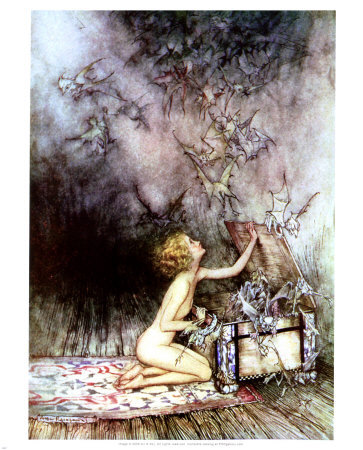
“Breathe the air we give, the life we live…” - Rise Against
Human beings were meant to be outside. Why are you not outside right now? Why are you reading this blog? It’s because your computer has become your best friend and your best access to the outside world.
You don’t realize it, but your computer is closer to you than your boyfriend or girlfriend; closer to you than your best friend. You spend your time speaking to these people through this box. If the box links you to those people then are you not technically the box’s friend? I once heard from a college professor who did way too many drugs when he was younger that there are four stages in the history of man. I’ve tried to subsequently research these four stages, however, I’ve been unable to find his exact rendition of it, so I’ll just say that this is my expanded interpretation of his interpretation of a Hindu myth while he was high. In the beginning men spoke with gods, as the gods disappeared men spoke with other men, as men began to hate other men men spoke with the animals, and as men destroyed the animals men were left with nothing to speak to but the rocks. Is this machine little more than a fancy, somewhat magical, modern marvel that has taken rocks and made them do amazing things? My interpretation of rocks in this case includes metals as well, though I am aware that scientifically they are very different. For the sake of argument you are communicating with an innovative rock. Sure, your best friend does so much more than a rock, but at a surface level both do about the same amount of movement and thinking on their own.
This box though is so much more precious than a stone. Do you not ask this box for advice? Is it not your guru? Google has replaced spiritual leaders. While once people went to another person for advice we now ask Google! “Why does my head spin when I get up too fast?” “How do I know if someone is cheating on me?” “How do I make General Tso’s Generally Awesome Chicken?” “How do I say hello in the ancient language of Jesus?” “Why does God hate me?” “How did we win World War II?” Go ask your doctor, your friend, your local Chinese Restaurateur, the nearest Aramaic scholar, a priest of some kind (ANY KIND, most have a God), and finally your uncle, your real uncle, not the one who comes over and makes you sit on his lap though you’re already 25. These actually all sound like awesome stories to tell if you actually went out and inquired into them! This empty box with a flashing | straight | line | is stealing your life experiences from you. The | flashing | line | waits | to | enlighten | you | | | |. Why search the world and see it at the same time when you can just click away? Why communicate with anyone when your box has all the answers contained somewhere in it? This box runs deep indeed, because it’s answers and suggestions are nearly endless.
In some cases this box is not just a friend and a spiritual guide, but a substitute lover. There is an insidious underbelly lurking behind every Google query. Just type in the word “junk” and see what comes up. Hell, type in the word “nun” and see how holy your search can really become if you don’t have a search filter on. Let’s be honest. How many of you seek companionship through this box? Facebook gives us plenty of people to look at. We peer at their lives, we comment on their photos, and we secretly harbor affections for them. Look at Myspace, which has become Yourspace really, because my actual space becomes invaded once a you from out there decides to send an oddly worded and somehow explicit link to my otherwise chill my-message-box. The fun doesn’t stop there either. How many of you pollute your minds with pornography that degrades women and promotes surgically enhanced and airbrushed standards of beauty? I for one am among the guilty. I once filled my head with unrealistic fantasies that objectified the other half of my species. I understand we are sensual beings, but at what cost? It took a strong, opinionated woman to help me see how wrong it could really be; to see how one innocent video cost somebody their dignity, or influenced someone else to exploit him or herself. I am not criticizing those of you that indulge in this world or work in this world, but I will say that there is a hidden cost to it. Just like any other thing we indulge in, like this box.
You’ve been reading for about five to ten minutes now. Is your box heating up? Is your box making that whirring noise it makes? Have you clicked away from this urgent message to read someone else’s urgent message? Are you communicating with your box or me right now? I’d like to believe I’m communicating with you, whoever you are in the Whoville of life within this box. However, the truth is nobody might ever get a chance to read this because Pandora’s Box runs deep and is filled with endless horrors. So, in essence, I’ve just spent an hour of my life communicating with my box. Perhaps the metaphor of Pandora’s Box bears more weight than I’m currently giving it, simply because in the myth there is something besides horror in the box, there is hope. I hope you in Whoville have read this message. I hope you in Whoville realize that this box, as cool as it is sometimes, is stopping us from breathing the air of our lives. Take a deep breath and a step back through the stages. Commune with animal, then commune with man, then commune with the gods, whoever they may be for you. Your rock is a dead weight hanging from a chain over your left shoulder.
Human beings were meant to be outside. Why are you not outside right now? Why are you reading this blog? It’s because your computer has become your best friend and your best access to the outside world.
You don’t realize it, but your computer is closer to you than your boyfriend or girlfriend; closer to you than your best friend. You spend your time speaking to these people through this box. If the box links you to those people then are you not technically the box’s friend? I once heard from a college professor who did way too many drugs when he was younger that there are four stages in the history of man. I’ve tried to subsequently research these four stages, however, I’ve been unable to find his exact rendition of it, so I’ll just say that this is my expanded interpretation of his interpretation of a Hindu myth while he was high. In the beginning men spoke with gods, as the gods disappeared men spoke with other men, as men began to hate other men men spoke with the animals, and as men destroyed the animals men were left with nothing to speak to but the rocks. Is this machine little more than a fancy, somewhat magical, modern marvel that has taken rocks and made them do amazing things? My interpretation of rocks in this case includes metals as well, though I am aware that scientifically they are very different. For the sake of argument you are communicating with an innovative rock. Sure, your best friend does so much more than a rock, but at a surface level both do about the same amount of movement and thinking on their own.
This box though is so much more precious than a stone. Do you not ask this box for advice? Is it not your guru? Google has replaced spiritual leaders. While once people went to another person for advice we now ask Google! “Why does my head spin when I get up too fast?” “How do I know if someone is cheating on me?” “How do I make General Tso’s Generally Awesome Chicken?” “How do I say hello in the ancient language of Jesus?” “Why does God hate me?” “How did we win World War II?” Go ask your doctor, your friend, your local Chinese Restaurateur, the nearest Aramaic scholar, a priest of some kind (ANY KIND, most have a God), and finally your uncle, your real uncle, not the one who comes over and makes you sit on his lap though you’re already 25. These actually all sound like awesome stories to tell if you actually went out and inquired into them! This empty box with a flashing | straight | line | is stealing your life experiences from you. The | flashing | line | waits | to | enlighten | you | | | |. Why search the world and see it at the same time when you can just click away? Why communicate with anyone when your box has all the answers contained somewhere in it? This box runs deep indeed, because it’s answers and suggestions are nearly endless.
In some cases this box is not just a friend and a spiritual guide, but a substitute lover. There is an insidious underbelly lurking behind every Google query. Just type in the word “junk” and see what comes up. Hell, type in the word “nun” and see how holy your search can really become if you don’t have a search filter on. Let’s be honest. How many of you seek companionship through this box? Facebook gives us plenty of people to look at. We peer at their lives, we comment on their photos, and we secretly harbor affections for them. Look at Myspace, which has become Yourspace really, because my actual space becomes invaded once a you from out there decides to send an oddly worded and somehow explicit link to my otherwise chill my-message-box. The fun doesn’t stop there either. How many of you pollute your minds with pornography that degrades women and promotes surgically enhanced and airbrushed standards of beauty? I for one am among the guilty. I once filled my head with unrealistic fantasies that objectified the other half of my species. I understand we are sensual beings, but at what cost? It took a strong, opinionated woman to help me see how wrong it could really be; to see how one innocent video cost somebody their dignity, or influenced someone else to exploit him or herself. I am not criticizing those of you that indulge in this world or work in this world, but I will say that there is a hidden cost to it. Just like any other thing we indulge in, like this box.
You’ve been reading for about five to ten minutes now. Is your box heating up? Is your box making that whirring noise it makes? Have you clicked away from this urgent message to read someone else’s urgent message? Are you communicating with your box or me right now? I’d like to believe I’m communicating with you, whoever you are in the Whoville of life within this box. However, the truth is nobody might ever get a chance to read this because Pandora’s Box runs deep and is filled with endless horrors. So, in essence, I’ve just spent an hour of my life communicating with my box. Perhaps the metaphor of Pandora’s Box bears more weight than I’m currently giving it, simply because in the myth there is something besides horror in the box, there is hope. I hope you in Whoville have read this message. I hope you in Whoville realize that this box, as cool as it is sometimes, is stopping us from breathing the air of our lives. Take a deep breath and a step back through the stages. Commune with animal, then commune with man, then commune with the gods, whoever they may be for you. Your rock is a dead weight hanging from a chain over your left shoulder.
Thursday, January 28, 2010
In Order to Dig One Must Know the Rules of Digging: A Stylistic Reading of the Brief and Wondrous Life of Oscar Wao
Note from Romero:
Sometimes I really feel like a scholar and I write academic essays. This essay is about my favorite book in recent memory, The Brief and Wondrous Life of Oscar Wao by Junot Diaz. I talk about how to teach the text in the classroom. This essay was also to remind myself that it's OK to teach students with the materials I love. Pretty soon I'll be posting my unit ideas for teaching Dr. Horrible's Sing Along Blog in the classroom, as well as my unit on Alan Moore's Watchmen. I taught Diaz's work in excerpts this year. The kids really enjoyed the text, but I felt that I couldn't do the book complete justice. Next year I'm really going to go all out, but for now I'll have to be at peace with the thought that most of my kids thought the book was the best thing they ever read in a class. The essay is a doosey and I recommend reading it in pieces. Please comment and let me know what you think.
Diaz, Juniot. The Brief and Wondrous Life of Oscar Wao. Riverhead Books. New York. 2007
Sometimes I really feel like a scholar and I write academic essays. This essay is about my favorite book in recent memory, The Brief and Wondrous Life of Oscar Wao by Junot Diaz. I talk about how to teach the text in the classroom. This essay was also to remind myself that it's OK to teach students with the materials I love. Pretty soon I'll be posting my unit ideas for teaching Dr. Horrible's Sing Along Blog in the classroom, as well as my unit on Alan Moore's Watchmen. I taught Diaz's work in excerpts this year. The kids really enjoyed the text, but I felt that I couldn't do the book complete justice. Next year I'm really going to go all out, but for now I'll have to be at peace with the thought that most of my kids thought the book was the best thing they ever read in a class. The essay is a doosey and I recommend reading it in pieces. Please comment and let me know what you think.
 In Order to Dig One Must Know the Rules of Digging:
“Of what import are brief, nameless lives...to Galactus?”
Fantastic Four, Stan Lee and Jack Kirby (Vol. 1, No. 49, April 1966)
Junot Diaz chooses to use the above quotation from Stan Lee’s Fantastic Four comic before he begins his novel, The Brief and Wondrous Life of Oscar Wao. Before interpreting the reason why Diaz might have chosen the quotation let us try to understand the quotation’s context. Galactus, the world devourer, sends his herald, the Silver Surfer, to scour the depths of the cosmos for planets on which Galactus might sate his mighty appetite. The Surfer arrives at a distant blue planet, Earth. Upon his arrival the Surfer informs the people of Earth that resistance is futile and that they should be honored to serve Galactus with their deaths. The Fantastic Four, the super family of the Marvel Universe, refuses to allow Surfer’s announcement to daunt them. For they know that their lives and the lives of all people on Earth matter enough to stand against the devourer of worlds, possibly the most powerful, amoral being in the entire universe. In much the same way, Oscar, the protagonist of Diaz’s novel, chooses to take a stand for his own little world against a force far greater than himself.
Diaz blends inner city slang Spanish, inner city slang English, Spanglish, formalized Dominican Spanish, comic book English, stylized informal literary English, and formalized literary English to tell Oscar’s story in a way that entices and opens the realm of his imagination to a very diverse readership. Due to the different language levels that Diaz uses to tell the story I am able to utilize the text, or at least excerpts from the text, with my English students. Since I teach in the Bronx, a borough that is generally known for low English test scores and unmotivated students, I need to reach out and find texts like Diaz’s, which manages to blend high ideas with dialectical forms of English and experiences to which my students can relate. I will utilize the discourse of stylistic analysis to dissect the various techniques, forms, and structures with which Diaz creates meaning and evokes an emotional response from his reader. The focus of this study is an excerpt from the final climactic moment in the novel; however, occasionally I will refer to other parts of the novel in order to establish a context for the reader. After an analysis of the linguistic features of Diaz’s text we can conduct a brief critical analysis and then speculate on how such a systematic close reading can be translated into a set of skill-based “lessons” for a high school English classroom.[1]
Teachable Moment 1: How to Analyze This Analysis
The framework for this critical reading comes from Chapter 9 of How English Works by Anne Curzan and Michael Adams. Curzan and Adams list the steps of a stylistic analysis to be as follows: “1. A systematic description of linguistic features in a specific text. 2. A critical analysis of the effects of these features, working together, in this specific text” (HEW 295). In other words, the “linguistic features” that are used to frame this study of Diaz’s text will give us the opportunity to critically analyze and relate these observations to the skill-sets and vocabulary students will need to perform this type of close reading. There are 8 “lessons” which are as follows: genre, perspective, type of speech, narrative structure, cohesion, verb processes, diction, and metaphor. Each lesson is framed with a set of “critical questions” that can be used simultaneously as classroom aims and guiding questions for teachers. In addition, each lesson contains at least one textual example and a brief summary of the skills acquired through the reading. We’ll begin our exploration by dissecting an excerpt from the novel in the style of a stylistic analysis.
Excerpt from The Brief and Wondrous Life of Oscar Wao
| Cohesion 1. Reference 2.Ellipsis/Substitution 3. Conjunction 4. Lexical Cohesion | Verbs Processes 1. Material 2. Mental Processes 3. Verbal Processes 4. Relational |
They walked him into the cane and then turned him around. He tried to stand bravely. (Clives they left tied up in the cab and while they had their backs turned he slipped into the cane, and he would be the one who would deliver Oscar to the family.) They looked at Oscar and he looked at them and then he started to speak. The words coming out like they belonged to someone else, his Spanish good for once. He told them that what they were doing was wrong, that they were going to take a great love out of the world.
Love was a rare thing, easily confused with a million other things, and if anybody
knew this to be true it was him. He told them about Ybón and the way he loved her and how much they had risked and that they’d started to dream the same dreams and say the same words. He told them that it was only because of her love that he’d been
able to do the thing that he had done, the thing they could no longer stop, told them if they killed him they would probably feel nothing and their children would probably feel nothing either, not until they were old and weak or about to be struck by a car and then they would sense him waiting on the other side and over there he wouldn’t be no fatboy or dork or kid no girl had ever loved; over there he’d be a hero, an avenger. Because anything you can dream (he put his hand up) you can be.
They waited respectfully for him to finish and then they said, their faces slowly disappearing in the gloom, Listen, we’ll let you go if you tell us what fuego means in English.
Fire, he blurted out, unable to help himself.
Oscar –
Lesson 1: Redefine Genre
- How can we redefine our conceptions about genre?
- How can genre help us identify themes and author intention?
Genre is normally defined in the classroom as a category under which one can file a book. There is no question that, in the classical sense of the word, the Brief and Wondrous Life of Oscar Wao is a coming-of-age novel (as dictated by both Amazon.com and Barnes and Noble). However, another, more interesting, way to think about genres is “as types of texts that tend to occur in or are associated with specific contexts or social occasions and serve identifiable purposes within those contexts” (HEW 296). In other words, in a stylistic analysis, we as scholars and students need to approach genre more from the angles of theme and author intention. This approach to genre provides a bridge for students into how they may address these often large and unfamiliar notions of theme and author purpose. For example, in thinking about the story of Oscar Wao as a whole, we might determine that Diaz can fit into several genres. The novel might be seen as a social commentary on Dominican culture or even
a political satire of the Trujillo regime.
Solely examining the excerpt one might interpret the genre to be a narrative commentary on the battle between good and evil. Lines 10 through 14 reveal this notion when the speaker says, “[Oscar] told them if they killed him they would probably feel nothing and their children would probably feel nothing either, not until they were old and weak or about to be struck by a car and then they would sense him waiting on the other side and over there…he’d be a hero, an
avenger.” The antagonists in the passage are portrayed through negative actions such as “they killed him” and “struck by a car,” and also by negative notions such as the idea that they and their children will “feel nothing.” Though the antagonists have the upper hand, due to their evil ways they and their children will be cursed. Meanwhile the protagonist, though about to be wiped out, is portrayed through positive images such as “waiting on the other side,” “hero,”
and “avenger.” The protagonist, though physically helpless at the moment, has a brighter future awaiting him in his next life. Good, ultimately, triumphs over evil though evil may seem to be the more powerful of the two.
Potentially, redefining genre will give teachers an opportunity to model in-depth analytical skills and it will give students an opportunity to focus their views on theme and author intent through critical questions such as, “Why did the author write this piece?” and “What are the main ideas of the piece?” In addition to critical questioning skills, this particular example of this type of analysis would also provide a student with the opportunity to learn how to determine important ideas and discern the difference between positive and negative imagery.
Lesson 2: Question Perspective
Critical Questions:
- How can we identify the type of narrator in a text?
- How is the way a narrator presents important information essential to the reader’s understanding of a text?
Once a reader has established the purpose of a piece in their mind, they must examine the voice that is used to present the piece. English teachers typically teach the 1st and 3rd person points of view, but the question is how many of them are explaining to their students how to examine the implications of the narrator’s perspective? Junot’s choice for narrator is Yunior, one of the characters in the novel, which seamlessly moves between a 1st person point of view and the 3rd person limited point of view. This is not immediately discernible in the passage because it lacks any 1st person references to Yunior. However, the passage does provide an opportunity to explore how the third person limited point of view allows the reader to make a deeper connection to the passage through the plight of the main character. This type of connection can be extracted from the text at the very beginning of the passage when the narrator says, “They walked him into the cane and then turned him around. He tried to stand bravely.” Oscar’s plight is immediate. “They” have control of his actions because they “walked” him and “turned him around.” Oscar is powerless and this powerlessness is portrayed to the reader in a straightforward fashion in that Oscar “tried to stand bravely.” The narrator’s use of the verb “tried” takes away both Oscar’s physical ability to stand and any sense of bravery that might have accompanied his action. There are no thoughts, only actions, and the 3rd person limited narration gives an unblinking, straightforward quality to the narrative. The fact that these actions are removed from the 1st person allows the reader to attain a broader awareness of the implications of the cane field as killing field and Oscar’s powerlessness in his inability to act.
In addition to knowledge about the different points of view, teachers must also model critical questioning skills that allow students to make connections to the text. These connections translate to a deeper awareness of the importance and immediacy of the literature.
Lesson 3: Interpreting Types of Speech
Critical Questions:
- How can we identify the difference between direct and indirect speech?
- How do the ways that a text presents speech and thought influence how a reader might interpret the deeper ideas of a text?
There are two types of speech in a piece of writing, direct and indirect. Direct speech is “quoted verbatim, with quotation marks” and indirect speech is “reported secondhand, with no quotation marks” (HEW 309). Writers often use direct speech as a way of depicting conversations as they occur in real-time and also as a means to characterization through giving characters unique speech patterns. Indirect speech is often used as a way to get across the gist of a conversation without displaying the actual conversation. Indirect speech can also be used to convey an experience from a broader perspective. Both forms of speech can be used to convey the stylistic effects of speech and control the tempo of a piece. The passage clearly demonstrates that Diaz blurs the line between the two in that he uses indirect speech that sounds like direct speech and direct speech without quotation marks. In fact, when it comes to direct speech Diaz kicks quotation marks to the curb for the entire novel, thus the reader is able to determine that Diaz’s lack of quotations is definitely a stylistic choice. Another observation is that the narrator prefers indirect speech, as evidenced by the lack of direct speech in the passage, which broadens the scope of the narrative and speeds the pace of the story to be more in line with an oral story, rather than a written text.
Lines 7 – 9 effectively demonstrate this oral mode of indirect speech: “He told them that what they were doing was wrong, that they were going to take a great love out of the world.” For the most part, the speech in the narrative is demonstrated through third person pronouns coupled with the past tense verb “told.” The indirect speech patterns of the narrator create a narrative that is heard, rather than seen on the page. This style of speech combines with the effect of the 3rd person limited narrator to provide an experience that is like an oral retelling of an important event. The rarity with which Diaz uses direct speech in the passage demonstrates how the narrator stylistically slows down his narrative for particularly jarring moments. An example of Diaz’s stylistic form of direct speech is demonstrated in line 18 when Oscar blurts out, “Fire.” The lack of quotations allows the narrative to flow more naturally and thus continue the effect of the indirect oral narrative. The result, however, slows down the narrative just enough to build suspense and make the reader ruminate on Oscar’s pathetic existence for a little bit longer. As modeled in this analysis we can see that through an exploration of direct and indirect speech students can acquire the skills necessary to pick up hints of stylistic effects and also how the tempo of a narrative can be established and changed based on the author’s style.
Lesson 4: Dissecting Narrative Structure
Critical Questions:
- How can we identify the components of a narrative?
- How do different methods of textual cohesion represent various meanings in a text?
Typically narrative is taught as a sequential bell curve that begins with an exposition, maxes out with a climax, and ends with a resolution. Simply put, there is beginning, middle, and end. While this method is great for teaching sequence and summary, it leaves something to be desired in terms of academic rigor. I believe that the six-step narrative outlined by Curzan and Adams on page 305 of How English Works is a more effective model to teach higher-level thinking about narrative structure in addition to sequence and summary (See Appendix B). The “Components of a Narrative” section of the book can be photocopied and distributed to students, or the sections can be broken into bulleted notes for students to jot down. In this way students can acquire the necessary vocabulary to name the components. Let us examine the narrative structure of the passage.
Both the abstract and the orientation of the passage occur in line one when the text says, “They walked him into the cane and then turned him around.” Line one gives an overview of the situation and orients the reader with who and where the players are. The complicating action of the piece occurs in lines five and six when the text says, “They looked at Oscar and he looked at them and then he started to speak.” Oscar is too weak to perform any action other than speaking in the passage. He cannot walk, turn, or stand by himself, but he can speak. By performing an action of his own accord Oscar takes control of his destiny and the situation changes. An example of evaluation in the passage occurs in lines 13-14 when the text says, “Because anything you can dream (he put his hand up) you can be.” The lines end Oscar’s indirect monologue and give his speaking a moral. It seems at this point that the narrator is using Oscar’s final moment to reveal an important truth to the reader. The fact that (he put his hand up) in the only parenthetical in the passage can lead the reader to make an inference that this particular sentence can be taken in its own special context. The resolution of the story occurs in lines 15-18. The men promise to let Oscar “go,” but instead trick him into telling them to “fire.” The fatal trick ends Oscar’s life and the events of the passage swiftly. What’s interesting is that the coda of the passage can be interpreted as either lines 13-14, due to the lesson it seeks to teach, or line 19, which simply reads “Oscar –.” The em dash is traditionally used to indicate the presence of a parenthetical thought, however there is no final thought on Oscar because he has died. Perhaps the em dash indicates that Oscar exists even after he leaves the world of the written page. Though his story falls into the void of the blank page, it has been engrained on the reader’s mind and thus serves as a lesson in bravery. Reexamining the components of a narrative through the lens of stylistic discourse can lead students to more complex interpretations through a close examination of how the author utilizes different sections of a narrative.
Lesson 5: Thinking About Grammar Through Cohesion
Critical Questions:
- How can we define and identify the different types of cohesion in a text?
- How does knowing the different methods of textual cohesion lead to a better reading of a text?
Curzan and Adams identify the four elements of textual cohesion as “reference,” “ellipsis” and “substitution,” “conjunction,” and “lexical cohesion” (HEW 300). For the purpose of this analysis let’s simply concentrate on an example of reference and conjunction.[2] Reference can be defined in the classroom as a way to connect sentences through the use of both pronouns and the antecedents to which they refer. An example of how this may work in the passage comes from the usage of the pronouns “them” and “they” to refer to the two thugs. Without a proper context, the pronouns leave the reader asking the obvious question of “who are they?” The “they” in the novel refers to two evil men that the narrator simply refers to as Gorilla Grod and Solomon Grundy[3]. However, the reader wouldn’t have known this from the passage. This little example demonstrates how important it is for a good reader to determine antecedents. Teaching students explicitly about reference and the different types of references can build important tracking skills for comprehension of a complex text. In addition, seeing how references work will make students more aware of references in their own writing.
Conjunction in the classroom is normally limited to a discussion of actual conjunctions and their functions, but the stylistic definition allows conjunction to be expanded to connect both ideas within a single sentence and within several sentences. An example of conjunction in the passage is the sentence that starts in line 9 and ends in line 15. The sentence is connected with four ands and three ors. The sentence demonstrates two aspects of the conjunction: one its ability to further a thought by providing greater details and two its ability to create complex run-on sentences. Fortunately Diaz is a skilled writer who uses the conjunction to expand his idea and simultaneously give the narrative the feeling of an oral story. Students can use the idea of conjunction to build their skills for tracking ideas across sentences as well as within individual sentences.
Lesson 6: Identifying Verb Processes
Critical Questions:
- How can we identify and classify different types of actions?
- How can we frame critical questions based on the types of actions in a text?
Grammatically, a verb is defined by its relationship with the word that follows it. Verbs can be transitive, intransitive, two-place transitive, and to be. In addition, a verb can also be viewed through process, or an “action that involves specific participant roles” (HEW 310). In other words, we can also view a verb by what it does, who does it, and whom they do it to. Curzan and Adams divide verbs into four categories of processes, which are “material processes,” “mental processes,” “verbal processes,” and “relational processes” (HEW 310). A close reading with these different verb processes in mind can lead to exciting discoveries in how the author uses verbs to express meaning (See Appendix C for a more detailed explanation of each type of action).
For example, in the passage there are roughly eighteen material processes, ten mental processes, and nine verbal processes. The material processes, such as “walked,” “turned,” “killed,” “disappearing,” and “fire,” are mostly actions that Grod and Grundy act on Oscar. They are strong and he is helpless, therefore the physicality of the passage belongs to the evil duo. However, the mental and verbal processes in the passage, such as “love,” “dream,” and “told,” belong to Oscar. Oscar’s mental and verbal processes act upon the men as well as the world. His story and mental capacities are greater than the physical strength of the men. Though they may kill him, he will continue to exist in a greater capacity. Much like Obi Wan in Star Wars once Oscar is struck down he will become more powerful than any of them can possibly imagine. His love, his words, and his dreams will live on, while Grod and Grundy disappear “in the gloom.” In light of this example we can conclude that the critical questions to arm students with for this type of analysis are, “Who are the actors or agents, and who is acted upon?” and “What kinds of verbs occur in the text?” (HEW 310). These questions can allow students to begin asking their own questions about how verb processes function to convey meaning in a text.
Lesson 7: Diction is Everything
Critical Questions:
- How can word choice influence a reader’s experience with a text?
- How can analyses of word choice lead to critical inquiry?
In a phrase, word choice, or diction, is everything. Words, words, words fill the reader with imagination, emotions, notions, and just about any other –ion we can think of. Without words there is no text to read and without the diverse lexicon of the English language there can be no style. Without word choice, how would one writer be able to differentiate him or herself from another writer? How would an author convey meaning? Because diction is such a large category I’ve chosen to narrow the scope of diction to the realm of lexical cohesion. Lexical cohesion ties the parts of a text together, both in the realm of ideas and style. Lexical cohesion includes the “Repetition of words across sentences” and the “Use of synonyms to create semantic connections” (HEW 302). The use of repetition and synonyms can both help a reader determine important ideas in a passage and make interpretations as to why an author chose to repeat certain words while changing others.
For example the passage repeats variations of the word “love” seven times. Oscar talks about his love of Ybón and her love of him. The repetition of the word asserts that love is an important idea in the passage and helps the reader draw an inference that love is the thing that Oscar is willing to die for. This observation allows the reader to understand how important and powerful love is in the realm of the text, which in turn adds significance to Oscar’s death. A connection can also be made to the Bible. Much like Jesus, Oscar is willing to die for love, which gives Oscar the status of martyr. Oscar’s death is not in vain. The sample connection here demonstrates that a student could learn about asking questions, determining important information, making inferences, and making connections all within the diction lesson.
Lesson 8: Metaphor in the Familiar
Critical Questions:
- How can we identify complex metaphors?
- How can we break down complex metaphors for simpler understanding of higher-level ideas?
Metaphor is usually defined in the classroom as a comparison that “likens two things by identifying one as the other” (Drury 168). The obvious shortcoming of this definition is that it limits metaphor to the realm of “things” and usually leaves students scratching their heads when the teacher asserts that everyday language use can attain a status in the figurative realm of the metaphor. Good writers aspire to employ “novel, more dramatic metaphors” to “draw our attention and make new; unfamiliar connections among things and notice new aspects of familiar things” (HEW 314). It is within the vein of the “familiar” that readers must connect to complex metaphors. Familiar “things” must be expanded into specific thought boxes and include objects, ideas, as well as every day language. In this sense metaphors are “‘carriers’ which help readers make ‘imaginative leaps’” (Drury 169). The writer provides the height, but the reader must provide the Air Jordans to make the leap. These figurative Jordans are laced and strapped tight with the prior knowledge that a student brings to the text such as text-to-self, text-to-text, and text-to-world connections.
An example of how every-day language use can be linked to metaphor comes from the saddest metaphor in the passage, which has to do with the slight play on the word “fire” in lines 17 and 18 of the passage. Grod and Grundy tell Oscar, “Listen, we’ll let you go if you tell us what fuego means in English.” Oscar blurts out “Fire” “unable to help himself.” Fuego literally means fire in English, however, the Spanish word strictly adheres to the meaning of fire as a noun. In English the word is clearly acceptable as a noun, as in a forest fire, or a verb, as in to discharge a firearm. The Spanish equivalent for the verb fire is actually disparar. Grod and Grundy blatantly misinterpret Oscar’s utterance of the noun “fire” and equate it with the English verb. This mistranslation amounts to little more than a mean-spirited pun for the men. The metaphor at work in the exchange is one that allows the reader to think of metaphor in terms of comparing languages and not just ideas. The higher-level understanding that a reader takes away from the passage is the implication in the passage that the men discharge their guns when Oscar says, “Fire,” killing Oscar in the process. Oscar’s untimely demise requires the reader to make an inference regarding the every day use of English and Spanish. An even higher imaginative leap can be made with the use of “fire” as a bilingual pun. Since the word infers Oscar’s death and is used as a pun simultaneously, the critical student might be able to make the jump that Oscar’s death is little more than a cruel joke. This imaginative bound heightens the feeling of contempt the reader has towards the evil men and deepens the emotional tie the reader has with the suffering protagonist. The metaphor, broken down with an affinity for every day connections, is perhaps the most potent tool in a student’s analytical toolbox.
Teachable Moment 2: Bringing it all Together & Teaching the Tex
years now and I still think about him” (Diaz 324). This is the essence of a good story. Years and years pass, yet we as readers still ruminate on new observations and feelings that may come about through a random, thoughtlessly worded allusion or arise upon a memory in the middle of a quiet, but sleepless night. In the end English teachers need to help students reach the level where books actually carry this kind of meaning. Readings and lessons conducted in the discourse of stylistics can help English teachers reach this goal a little easier. We must simply remember that the lessons of genre, perspective, speech types, narrative structure, cohesion, verb processes, diction, and metaphor can help develop the analytic skills that lead to deeper levels of understanding.
Why make our students skate upon the cold surface of literature when we can defrost the ocean and swim?
Works Cited
Diaz, Juniot. The Brief and Wondrous Life of Oscar Wao. Riverhead Books. New York. 2007
Drury, John. The Poetry Dictionary. Writer’s Digest Books. 2006.
[1] A lesson is normally just one day. I use the term “lessons” loosely to refer more to a set
of skills learned over the course of however many lessons a teacher needs to
teach a skill-set.
[2] Due to the close relationship between diction and lexical cohesion, the diction lesson is reserved for a discussion of lexical cohesion.
[3] Gorilla Grod and Solomon Grundy are semi-obscure DC comics villains known for their size and strength.
Subscribe to:
Comments (Atom)
